What Is the Best Water Pressure Pump in 2026?

A dependable water pressure pump can make weak taps, slow showers, and uneven garden watering far less frustrating. But the right choice depends on more than a high pressure rating. Home size, water source, pipe layout, and simultaneous demand all affect performance. A compact booster may suit a small home, while a deeper well or multi-storey property can require a different design. Fit matters.

This guide explores what to look for in the best water pressure pump in 2026, including flow rate, pressure range, motor power, noise, materials, and warranty support. It also explains the difference between booster pumps and well pumps, so readers can compare models suited to their actual water supply. Manufacturer specifications are useful, but they need context: advertised flow may assume ideal conditions and may not match a real installation. That can be easy to miss. We’ll consider operating costs, maintenance needs, and practical features such as automatic controls, while noting where product claims deserve a closer look. No single pump is best for every home. A careful match between the pump’s capabilities and the system’s requirements is more useful than a popular model chosen by name alone.
What Is the Best Water Pressure Pump in 2026?

What a Water Pressure Pump Does and How It Works

A water pressure pump increases the force that moves water through pipes. It does not create water or repair a weak supply. Instead, it draws water from a tank, well, or incoming line and pushes it toward taps, showers, and appliances. You notice its work when a shower runs steadily, even as another tap opens. That matters.

Many home systems use an electric motor to drive an impeller or diaphragm. As water flows, a pressure sensor or switch monitors the system. When pressure falls below its set point, the pump starts; when pressure rises again, it stops. Some systems include a pressure tank, which stores a small amount of pressurized water. This can reduce frequent starts and stops, which may otherwise wear components faster. The exact arrangement varies, so check the pump and tank specifications before installation.

A pump cannot compensate for every problem. A clogged filter, leaking pipe, or narrow plumbing run can still limit flow. For example, if a kitchen tap slows when a toilet fills, the cause may involve more than pump pressure. Matching pump capacity to the water source and household demand is important. Higher pressure is not automatically better; excessive pressure can strain pipes and fixtures. Measure the system, and consider asking a qualified installer to assess it. I would not guess from a pump’s headline rating alone.

The Main Types of Water Pressure Pumps in 2026

What Is the Best Water Pressure Pump in 2026?

The Main Types of Water Pressure Pumps in 2026

Water pressure pumps suit different water sources and household demands. A centrifugal booster pump is a common choice for raising pressure from a reliable supply. It uses a rotating impeller to move water, and works best when the inlet supply is steady. If several showers or taps run at once, a multistage pump can provide stronger, more consistent pressure. Its stacked impellers build pressure gradually. These units are often quieter, but can cost more and need space.

Variable-speed pumps adjust motor speed as demand changes. Open one tap, and the pump slows; run several, and it speeds up. This can reduce pressure swings and wasted energy. Jet pumps draw water from wells, while submersible pumps sit underwater and push it upward. The right type depends on the water source, lift height, pipe size, and required flow rate. Check the pump’s performance chart, not just its maximum pressure figure. That number alone can mislead.

A practical check is to note how pressure behaves when multiple fixtures run. Is it a weak trickle, or does it drop only upstairs? The answer may point to a sizing issue, clogged filter, or narrow pipe—not a pump problem. Installation details matter. A pressure tank, dry-run protection, and correctly sized connections can help prevent frequent cycling and damage.

Small details count. Exact needs vary, and I would not guess at pump capacity without measuring the system.

How to Match Pump Capacity to Your Water System

Choosing a water pressure pump starts with the system, not the largest number on a product label. Estimate the flow your home needs when several outlets run together. A shower, kitchen tap, and washing machine may overlap, even if not every fixture runs at once. Check the pump’s flow rate at the pressure your system requires; maximum flow and maximum pressure rarely occur together.

Measure the vertical lift from the water source to the highest outlet. Add pressure lost through long pipes, narrow sections, filters, and bends. A pump curve helps show whether a model can deliver useful flow after those demands are included. For example, a pump that looks adequate beside a storage tank may struggle when water must travel upstairs through older, restrictive plumbing. Measure, don’t guess.

It is easy to overestimate demand and choose an oversized pump. That can cause frequent cycling, noise, and unnecessary wear, especially without a correctly sized pressure tank. Undersizing can leave showers weak when another tap opens. Neither choice is obvious from household size alone. Record source level, pipe dimensions, and peak fixture use, then compare them with the pump curve. If the supply level changes seasonally, allow for that too. It’s an imperfect estimate, but a measured one is better. A qualified plumbing professional can verify the figures and check that the pump suits the existing controls and pipework.

How to match pump capacity: Choose a pump that can deliver the estimated flow at your required pressure—not merely its advertised maximum flow. These illustrative estimates assume 2.0 GPM per shower, 1.5 GPM for a kitchen faucet, and 2.5 GPM while a washing machine fills. Actual flow varies by fixture and usage. Also account for elevation and pipe losses when sizing your system.

Key Features for Comparing Water Pressure Pumps

The best water pressure pump in 2026 depends on the job it must do, not the largest motor. Compare flow rate at the pressure your fixtures require, then account for elevation and pipe friction. A pump’s maximum pressure rating does not tell you how much water it can deliver at that pressure. Check its performance curve. Small detail, big difference.

Compare pressure-control range, tank capacity, motor efficiency, noise, and protection against dry running or overheating. The U.S. Department of Energy’s Improving Pumping System Performance sourcebook reports that pumping systems use nearly 20% of global electricity demand. That figure covers pumping systems broadly, not household pumps, but it underlines why efficiency matters. Variable-speed control may help match output to changing demand, though it can add cost and maintenance complexity.

Installation conditions matter, too. Narrow pipes, clogged filters, or a leaking fixture can leave taps weak even with a powerful pump. The U.S. EPA’s WaterSense program estimates household leaks waste

nearly 10,000 gallons of water per year. Check for leaks before upgrading.

Also verify that the pump’s materials suit the water and location, and that replacement parts are accessible. Ratings are useful, but real plumbing rarely behaves like a perfect test setup.

How to Choose a Pump for Different Applications

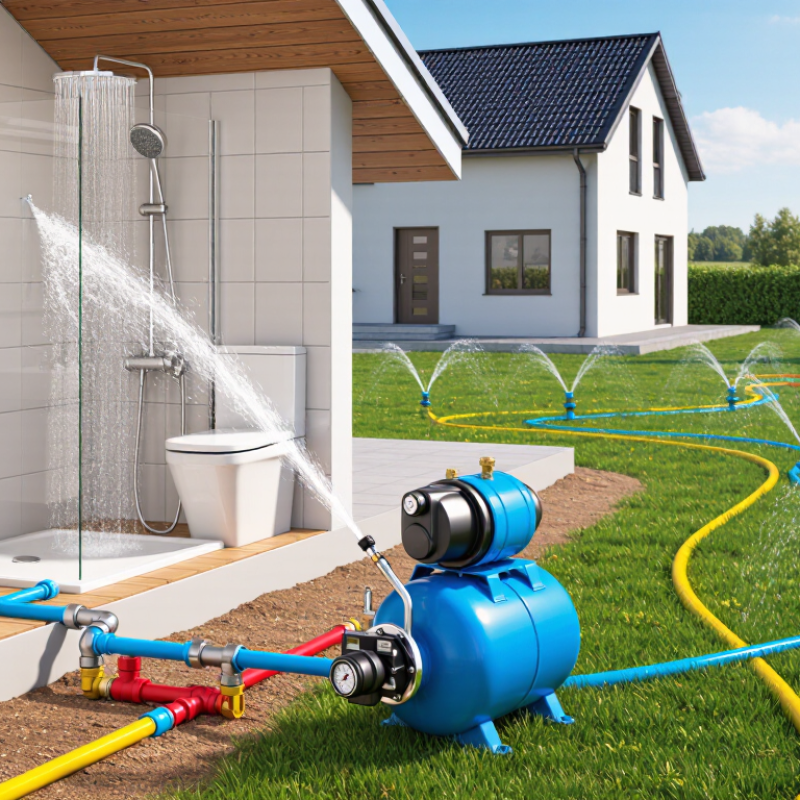
The best water pressure pump depends on where the water comes from and how it will be used. A home shower needs steady flow during short demand peaks, while garden irrigation may require longer, predictable runs. Match the pump’s flow rate and pressure to the actual fixtures or equipment, not just the largest number on its label. Start with the water source.

For a shallow well or storage tank, check the pump’s lift limits and whether it can run safely when water levels fall. A booster pump can help with weak incoming pressure, but it cannot create water that the supply does not provide. For a multi-storey home, calculate the height the water must rise, then allow for pressure losses in narrow pipes, bends, and filters. Small details matter.

Before buying, compare the pump’s performance curve with the flow and pressure your application requires. A pressure tank can reduce frequent starts in household systems; irrigation layouts may benefit more from carefully divided zones. Check noise, power requirements, maintenance access, and protection against dry running. Even a careful estimate can miss real-world pipe losses, so treat it as a starting point and verify the installation conditions before choosing.

What Is the Best Water Pressure Pump in 2026? — How to Choose a Pump for Different Applications
Application Suitable Pump Type Typical Operating Pressure Typical Flow Range Key Selection Considerations
Boosting low municipal water pressure in a house Automatic booster pump; a variable-speed multistage model is useful when demand changes often Often selected to add about 15–40 psi, subject to inlet pressure and the plumbing system’s limits About 5–20 gpm for many residential systems Measure incoming pressure and expected peak demand first. Include a pressure sensor or controller, dry-run protection, and any required backflow protection. In many U.S. plumbing codes, system pressure above 80 psi requires pressure regulation; check local requirements.
Supplying a home from a shallow well Shallow-well jet pump with a pressure tank and pressure switch Common switch settings are 30/50 or 40/60 psi (cut-in/cut-out) About 5–20 gpm, depending on well yield and pump curve Typically suited to suction lifts of roughly 25 ft or less. Actual capacity falls as lift and required discharge pressure increase. Confirm the well can sustainably supply the chosen flow.
Supplying a home from a deeper well Deep-well jet pump or submersible well pump Residential pressure systems commonly use 30/50 or 40/60 psi switch settings Often about 3–20 gpm for residential installations Choose by total dynamic head, well depth, drawdown, and required household flow. Deep-well jet configurations can serve greater depths than shallow-well units, but their usable flow depends on the ejector arrangement and system curve.
Deep borehole or high-lift well supply Submersible well pump Set to the system’s required pressure; the pump must also overcome the vertical lift and pipe losses Common residential selections range from about 5–30 gpm; larger flows require a suitable well and pump curve Size from total dynamic head, including vertical lift, desired outlet pressure, and friction loss. Check motor compatibility, water level, well yield, and minimum flow requirements.
Garden or small-scale irrigation Centrifugal pump for a tank or pond; a well pump may be needed for a well source Many sprinkler systems operate around 30–60 psi at the sprinkler, depending on nozzle requirements Highly system-dependent; roughly 5–40 gpm is common for small to medium zones Match flow and pressure to the sprinklers or drip system. Use separate zones when needed, and account for elevation change, filter losses, and pipe friction. Drip irrigation usually needs pressure regulation.
Mobile home, boat, or small off-grid water system Self-priming diaphragm demand pump Common shut-off pressure is roughly 30–60 psi, depending on the system About 1–5 gpm for many small systems Check the required flow, pressure-switch setting, voltage, noise, and whether an accumulator tank is recommended. Use potable-water-rated components where drinking water is supplied.
Multi-storey building or multiple simultaneous outlets Variable-speed multistage booster set, often with multiple pumps for larger systems Designed for the pressure required at the highest or most distant outlet; there is no single suitable range for every building Determined by peak simultaneous demand and the building’s plumbing design Calculate required pressure at the critical outlet, elevation gain, friction losses, and peak demand. Consider pressure zoning, a pressure vessel, standby capacity, noise limits, and applicable building codes.
How to compare pumps: These are general planning ranges, not guaranteed pump outputs. Confirm performance against the manufacturer’s pump curve at the required flow and total dynamic head. Pressure and flow are linked: increasing the required pressure generally reduces the flow available from a given pump. Final selection should also account for water source, pipe size, duty cycle, electrical supply, and local plumbing rules.