Essential Tips for Choosing a Sump Pump Back Up Battery for Your Home?
When it comes to safeguarding your home from flooding, a sump pump back up battery is essential. It serves as a reliable support during power outages or system failures. Choosing the right battery isn't always straightforward. Many options exist, each with unique features and benefits.
Understanding the various types of sump pump back up batteries can be overwhelming. You may feel lost in a sea of technical specifications and brands. Each battery type offers different run times and capacities, which can affect home protection. Evaluating your specific needs is crucial; not all homes experience the same water issues.
Sometimes, the cheapest option seems tempting, but that might lead to regrets later. A less reliable battery could fail you at a critical moment. Make sure to consider warranty options and customer reviews. It's vital to do your homework before making this decision. Taking the time to research will ensure you find the best sump pump back up battery for your needs.
Understanding the Importance of a Sump Pump Backup Battery
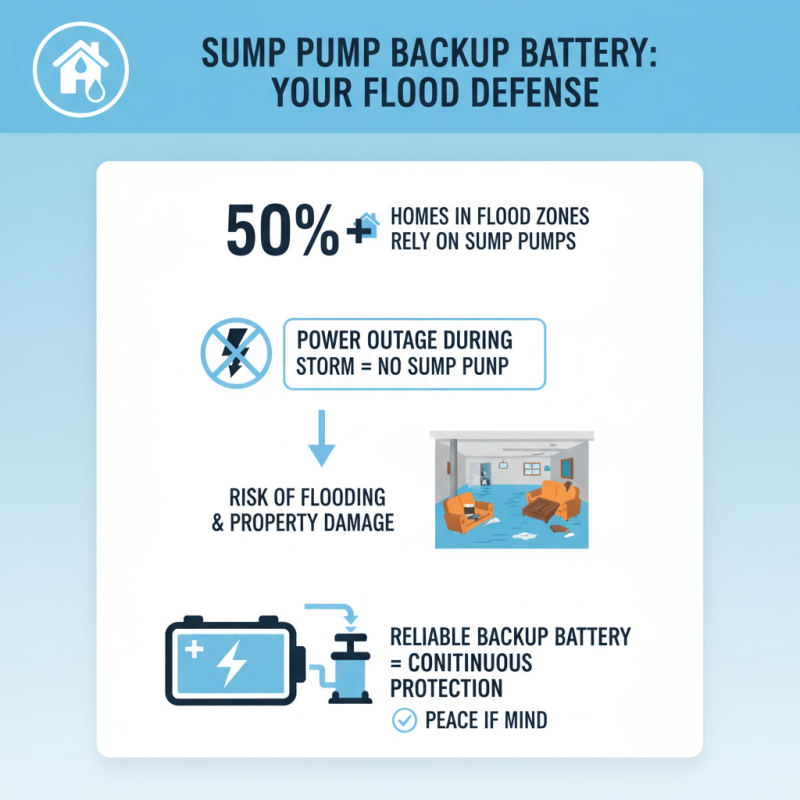
A sump pump backup battery is crucial for homeowners. More than 50% of homes in flood-prone areas rely on sump pumps. When the power goes out during a storm, sump pumps cannot function. This can lead to flooding and significant property damage. A reliable backup battery can ensure continuous operation.
Choosing the right backup battery is key. Not all batteries provide the same level of performance. A high-quality battery can last anywhere from 24 to 72 hours, depending on the pump's usage. A study by the American Society of Home Inspectors found that one in four homeowners experienced basement flooding. Many of these incidents could have been avoided with proper battery backup systems.
Homeowners should consider battery capacity and type. Many opt for deep-cycle batteries; they offer longer life cycles and better power storage. It's essential to regularly test the system too. Neglecting maintenance can lead to battery failure when needed most. An effective sump pump backup battery system is not just a backup; it’s a safeguard for your home.
Assessing Your Home's Water Intrusion Risk and Power Needs
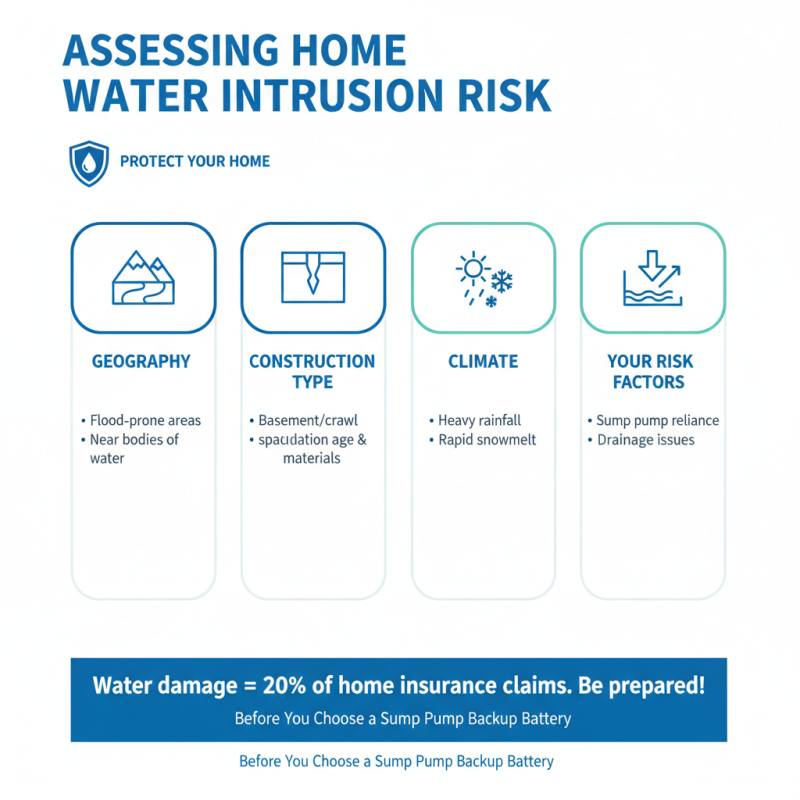
Assessing your home’s water intrusion risk is crucial before choosing a sump pump backup battery. Water damage remains a top cause of home insurance claims, accounting for about 20% of all claims. The risk depends on several factors, including geography, construction type, and climate. Homes in flood-prone areas often face higher risks. You might think your home is safe, but heavy rainfall or melting snow can lead to unexpected issues.
Evaluating power needs is equally important. A sump pump can protect your basement, but if the power goes out, its effectiveness wanes. Around 30% of homeowners fail to prepare for power outages during storms. Choosing the right backup battery ensures the pump functions when you need it most. Consider the pump's wattage. Many pumps require 400 to 700 watts to operate. You want a battery that can handle this load for several hours. Realistically, not all setups will offer enough runtime.
In conclusion, assess both the risk of water intrusion and your pump’s power requirements thoroughly. The ideal setup is unique to each home. Make a list of your home’s specific needs to avoid pitfalls. It’s easy to overlook these details in the planning stages. Planning ahead can save you thousands in potential water damage.
Identifying Key Features in Sump Pump Backup Batteries
When selecting a sump pump backup battery, focus on key features that matter. Battery capacity is crucial. A deep-cycle battery, for example, offers sustained power. Look for batteries with at least 75 amp-hours. This delivers reliable performance during prolonged outages. Research indicates that a more powerful battery lasts longer. In fact, a study showed that 60% of battery failures relate to inadequate capacity.
Another essential feature is the battery's charge cycle. A quality battery will have a minimum of 500 charge cycles. This means longer life and fewer replacements. Some batteries even claim over 1,000 cycles, which can save you money. Consider the battery’s maintenance needs as well. Sealed lead-acid batteries require little upkeep compared to flooded ones. However, almost 30% of homeowners neglect regular checks, leading to unexpected failures.
Lastly, evaluate the overall design and installation ease. A compact design fits well in tight spaces. Some units come with built-in alarms for low battery warnings. Ensure the model you choose has this feature. Users often overlook this, leading to unplanned sump pump shutdowns. Remember, selecting the right sump pump backup battery impacts your home’s safety.
Essential Tips for Choosing a Sump Pump Back Up Battery for Your Home
Evaluating Battery Types: Lead-Acid vs. Lithium-Ion Options
When evaluating battery types for sump pump backup,
it’s essential to consider both lead-acid and
lithium-ion options.
Lead-acid batteries are traditional and affordable.
They are heavier and require regular maintenance. However, they can be less reliable over time.
On the other hand, lithium-ion batteries offer longer lifespans and are lighter.
Their price can be a barrier for some homeowners.
Tips: Decide based on your budget and usage.
Consider the power requirements of your sump pump. Analyze the expected run time during power outages.
If you value efficiency and longevity, lithium-ion could be the better choice.
Another factor to consider is charging time.
Lead-acid batteries take longer to recharge.
This can be an issue if there are frequent outages.
Lithium-ion batteries recharge quickly, providing a reliable power source.
Assess your home’s needs carefully before making a decision. Testing both types can help you understand their performance.
Installation and Maintenance Tips for Backup Battery Systems
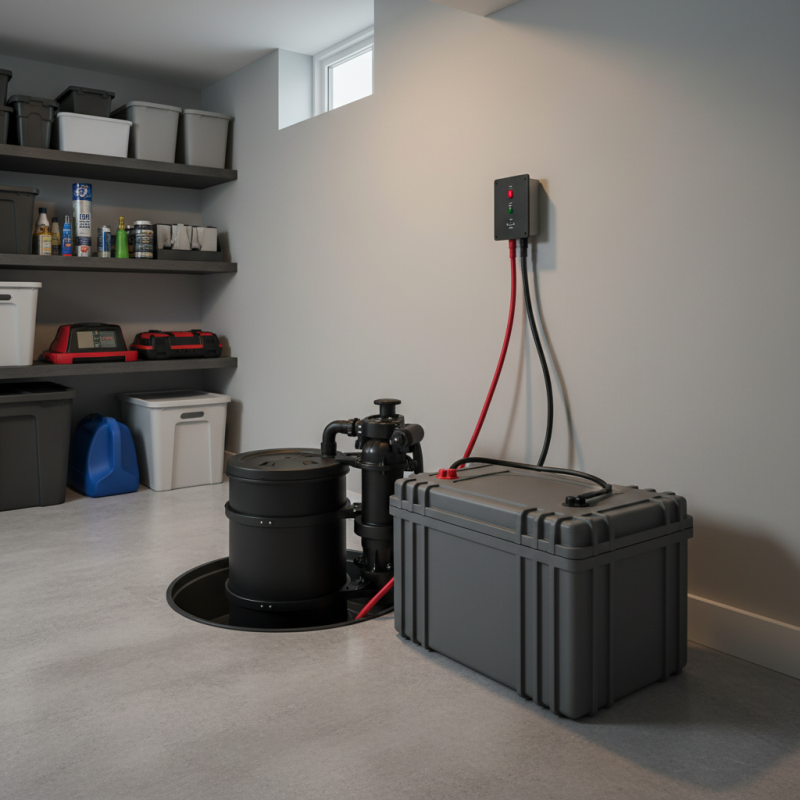
When installing a backup battery system for your sump pump, attention to detail is crucial. Start by selecting a battery that matches the pump’s voltage and flow rate. This ensures adequate power supply during outages. Many homeowners overlook the importance of battery size. A larger capacity can provide longer run times, which could be critical during heavy rain.
Proper installation is key. Mount the battery securely in a dry, accessible location. Ensure the connections are tight and check for any corrosion. Regular maintenance is essential. Test the system monthly to verify that the battery holds charge. Also, check the water levels in flooded sump pits. It’s easy to forget the basics, but neglect can lead to failure when it matters most.
A common mistake is assuming the backup system is foolproof. Don't ignore the manufacturer's maintenance guidelines. Replace the battery every 3-5 years, even if it seems fine. An aging battery may not perform during emergencies. Look for signs of wear and be proactive. This approach can save you from costly water damage later.
Essential Tips for Choosing a Sump Pump Back Up Battery for Your Home
| Feature |
Recommendation |
| Battery Type |
Deep Cycle Lead Acid or AGM |
| Battery Capacity |
At least 50 Ah |
| Run Time |
Minimum of 5-10 hours |
| Charging Time |
Under 24 hours |
| Maintenance |
Regular checks every 6 months |
| Warranty |
At least 2 years |
| Installation |
Professional installation recommended |