10 Essential Tips for Choosing the Right Battery Sump Pump
In recent years, battery sump pumps have gained popularity as reliable solutions for basement flooding. According to a report by the American Society of Home Inspectors, nearly 60% of U.S. homes experience some level of water damage. This statistic underscores the importance of choosing the right sump pump. Battery sump pumps offer a backup solution when the power goes out, ensuring that water levels remain under control.
When selecting a battery sump pump, key factors must be considered. The capacity, battery life, and installation process play critical roles in performance. Some models can pump out 1,200 gallons per hour, which is crucial for larger basements. However, users often overlook maintenance, which affects reliability. Regular checks can prevent potential failures.
Budgeting for a quality system is essential too. While it might be tempting to opt for cheaper options, they may not withstand heavy rainfall. Invest in a capable model to ensure peace of mind during storms. Deliberately exploring options helps ensure you choose a battery sump pump that meets your specific needs. It's a decision that demands careful thought and evaluation.
Understanding the Importance of Battery Sump Pumps in Flood Prevention
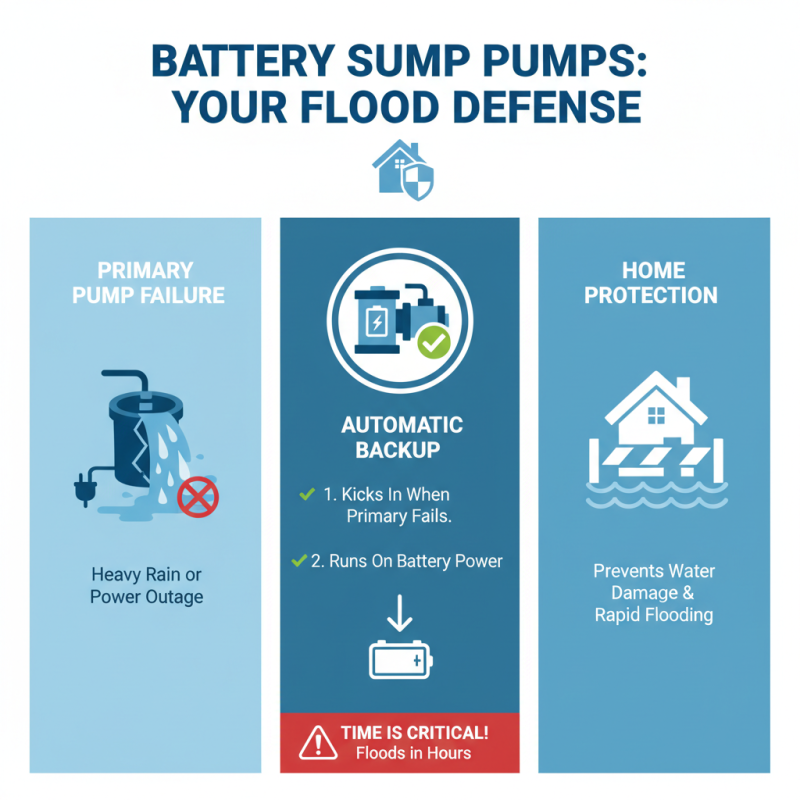
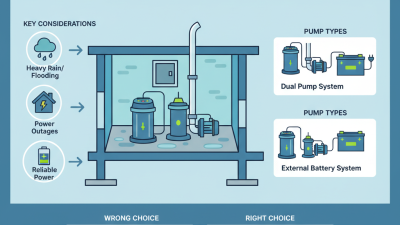
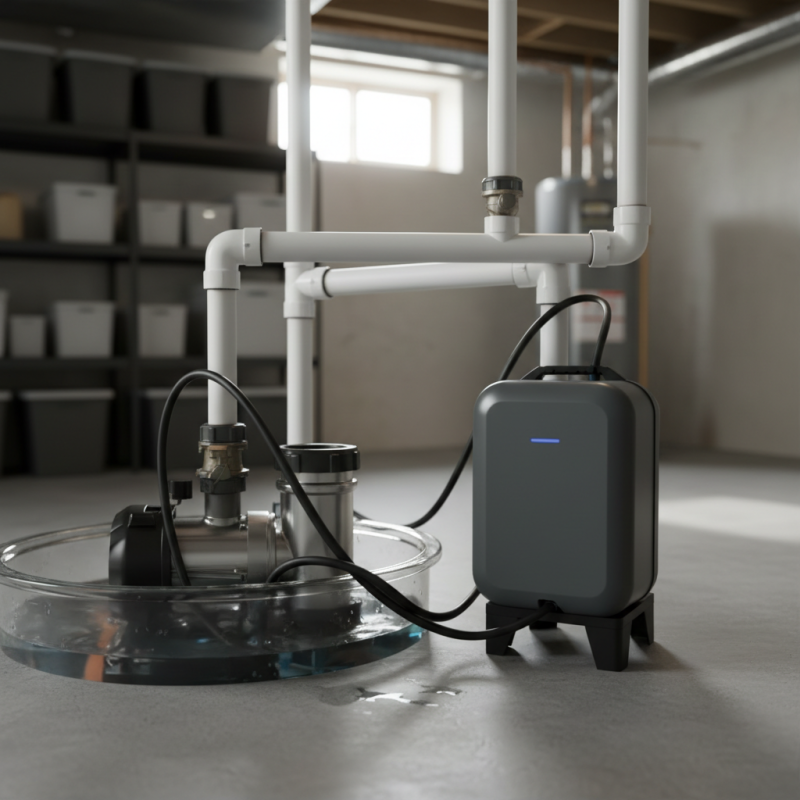
Battery sump pumps play a critical role in flood prevention. They act as a backup system during heavy rainfall or power outages. When the primary pump fails, a battery sump pump kicks in, protecting homes from water damage. These devices run on batteries, ensuring they operate even without electricity. It’s alarming to think about how quickly water can accumulate, overwhelming a home in just a few hours.
Selecting the right battery sump pump requires careful thought. Not all models provide the same level of efficiency. Factors like pumping capacity and battery life are essential. A pump that only lasts a few hours may not be sufficient during severe storms. Additionally, consider the installation space; an overly complicated setup can lead to mistakes or inefficiency later. It's vital to assess your specific needs rather than blindly following recommendations.
Sometimes, people overlook maintenance. Regular checks are crucial but often neglected. A pump with a clogged filter or low battery won't perform well. It's easy to forget about these tools until it’s too late. Proper understanding and planning significantly reduce flood risks, making battery sump pumps indispensable in modern homes.
Identifying Key Features to Look for in a Battery Sump Pump
When choosing a battery sump pump, it’s crucial to identify key features that suit your needs. First, consider the power of the pump. Look for one with sufficient horsepower to manage the water levels in your area. A pump that operates at a higher capacity can better handle heavy rains, but might be noisier.
Think about the noise factor if you live in close quarters with neighbors.
Another important feature is the battery life. Ensure the pump can run for extended periods without needing a recharge.
Investigate the type of battery. Lead-acid batteries might be cheaper but have shorter lifespans. Lithium-ion batteries offer longevity but may come at a higher cost. Reflect on your budget when making this choice.
Don’t overlook the pump's construction. A durable, corrosion-resistant body is vital for longevity.
Plastic can be light and effective, but metal can withstand harsh conditions better. Read reviews to learn about others' experiences, but remember that every situation is unique.
Some users may find their choice inadequate during power outages or heavy flooding. Weigh the pros and cons thoughtfully.
Comparing Battery Types: Pros and Cons for Sump Pump Use
When choosing a battery type for your sump pump, understanding the pros and cons of each option is crucial. Lead-acid batteries are a common choice. They are affordable and widely available. However, they do have limitations. Their lifespan is typically shorter, lasting only 3 to 5 years. They also require regular maintenance to ensure optimal performance.
Lithium-ion batteries are becoming increasingly popular. They have a longer lifespan, often exceeding 10 years. Additionally, they charge faster and provide consistent power. Yet, they tend to be more expensive upfront. Industry reports indicate that lithium-ion batteries can cost up to 50% more than lead-acid alternatives. This higher cost may deter some homeowners. Nevertheless, the longevity can justify the investment.
Ultimately, your choice should depend on your specific needs. Consider how often your sump pump will be used. If your area is prone to heavy flooding or storms, investing in a lithium-ion battery might pay off. Additionally, think about your budget. Would you rather save money now or invest in a more reliable long-term solution? This decision is not easy and requires careful thought on performance and cost.
10 Essential Tips for Choosing the Right Battery Sump Pump - Comparing Battery Types: Pros and Cons for Sump Pump Use
| Battery Type |
Pros |
Cons |
Best Use Case |
| Lead-Acid Battery |
Cost-effective, readily available |
Heavier, shorter lifespan |
General sump pump use |
| Gel Battery |
Maintenance-free, vibration-resistant |
Less capacity compared to flooded |
Location with high vibration |
| AGM Battery |
Deep discharge capability, durable |
Higher cost, sensitive to overcharging |
Frequent long-term usage |
| Lithium-Ion Battery |
Lightweight, long lifespan, fast charging |
Expensive, requires special chargers |
Advanced systems, remote monitoring |
Evaluating Pump Capacity and Drainage Rate for Your Needs
When evaluating pump capacity, consider the specific requirements of your space. A battery sump pump's capacity is often measured in gallons per minute (GPM). This figure indicates how quickly the pump can remove water. If your area frequently faces flooding, you need a high-capacity pump. Check the drainage rate. A pump with a 30 GPM rate may not suffice for heavy conditions. Smaller pumps could leave water behind.
Next, think about the depth of your sump pit. A deeper pit may require a pump with a higher lift rate. This means the pump can push water higher before it discharges. Do not rely on maximum numbers. Real-world performance can vary. Assess how much water you anticipate during rainstorms or flooding events. Smaller issues may not require an overly powerful pump. Balance efficiency with your needs. Battery backup systems offer peace of mind. They ensure operation even during power outages, but analyze your typical usage.
Understand that higher capacity often comes with higher costs. You want quality, but avoid overspending. Research different models and user reviews. Sometimes a lower-capacity pump will serve you better. Always consider your unique situation. Make a choice that fits your home and budget without compromising safety.
Assessing Maintenance Requirements for Longevity and Performance
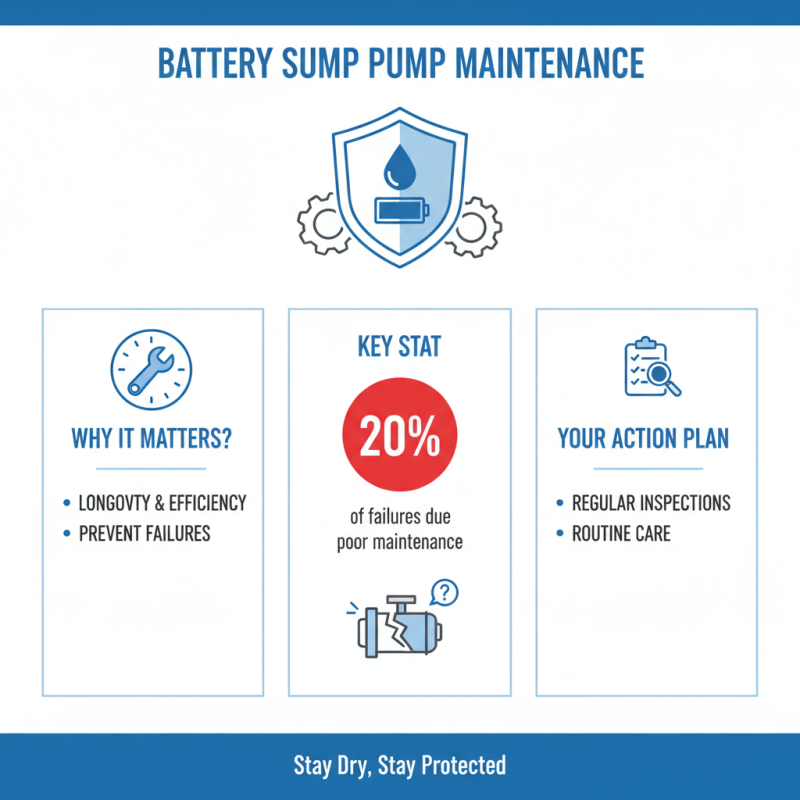
When considering a battery sump pump, maintenance is crucial for its longevity and efficiency. Regular inspections can prevent unexpected failures. According to industry reports, about 20% of sump pump failures are due to poor maintenance. This highlights the importance of regular checks and care.
Routine tasks don't require extensive knowledge. Simply cleaning the pump and checking the battery can greatly enhance performance. The battery should be tested every three months for optimal functionality. Interestingly, some studies show that a well-maintained pump can last up to 10 years, while neglect can cut that lifespan in half.
Pay attention to the pump’s environment. Dust and debris can clog systems, impacting efficiency. Reports indicate that failure rates increase in neglected systems. It’s vital to keep the area around the sump pump clean. Documentation of maintenance actions can also help track performance over time. Regular maintenance not only prolongs life but boosts overall reliability.