Choosing a water commander in 2026 requires more than comparing prices or browsing impressive product photos. It means matching the system to real water conditions, operating demands, and long-term maintenance needs. A capable water commander should provide stable flow, efficient energy use, dependable controls, and clear performance data. It should also fit the site, whether that means a household basement, agricultural field, construction area, or emergency drainage location.
Dr. Peter Gleick, a leading water researcher and co-founder of the Pacific Institute, has said, “If there is no water, there is no life.” That simple statement gives this decision practical weight. Before selecting a water commander, check pumping capacity, maximum head, power requirements, inlet size, noise levels, and protection against dry running. Ask how easily filters, seals, cables, and control parts can be inspected. Small details matter. A blocked intake can stop an otherwise powerful system.
In my experience reviewing water equipment, published specifications often look cleaner than field conditions. Mud, long hoses, voltage changes, and irregular usage can reduce performance. That is where many buying guides become too confident. The best choice may not be the strongest model. It may be the unit that starts reliably, uses reasonable energy, and receives support when something goes wrong. Certification, warranty terms, replacement-part availability, and verified customer feedback deserve equal attention. A thoughtful water commander decision leaves room for doubt, testing, and adjustment.
How to Choose a Water Commander in 2026?
A water commander is a control system that manages water flow, pressure, and supply. It may connect pumps, valves, sensors, and a central dashboard. The system reads conditions, then adjusts water movement automatically. For example, a pressure sensor can detect a sudden drop. The controller may reduce pump activity or alert the operator. This helps limit waste and protects pipes from unnecessary stress.
In 2026, reliable systems will use clearer data and stronger safety controls. Look for accurate sensors, manual override options, and records of pressure changes. Compatibility also matters. A controller should work with your existing pipes, pumps, and monitoring equipment. From field testing, simple interfaces often prevent more mistakes than crowded dashboards. However, remote access is not always convenient. Poor network coverage can delay alerts, so local controls remain important. I would not choose a system based only on smart features.
Tips: Check the operating pressure range before buying. Ask how often sensors need calibration. Test the alarm in a real operating condition. Keep a written backup procedure nearby. Choose weather-resistant equipment for outdoor installations. Confirm that trained technicians can service it locally. Small details matter. A water commander should respond predictably, even when data is incomplete or conditions change. Depth sensors, leak detection, and scheduled shutoff settings can improve control, but each feature adds another point to inspect.
Choosing a Water Commander in 2026 should begin with water risk, not a feature checklist. The practical question is simple: which functions match your site’s daily decisions? The UNESCO World Water Development Report 2024 estimates that agriculture uses about 70% of global freshwater withdrawals. A greenhouse needs flow trends, valve scheduling, soil data, and weather adjustments. An apartment building needs pressure alerts, meter comparisons, and rapid shutoff. Different problems require different evidence.
Leak detection deserves priority. The U.S. Environmental Protection Agency reports that household leaks can waste nearly 10,000 gallons annually. Choose sensors that distinguish burst pipes from normal night use. Look for adjustable thresholds, local alarms, mobile notifications, and audit trails. Do not trust a polished dashboard without testing response time. A common field lesson is uncomfortable: confusing alerts can cause more hesitation than missing charts.
Interoperability shapes long-term value. Check open data exports, documented protocols, role-based access, and offline operation. The International Water Association’s digital water guidance emphasizes data quality, resilience, and operational integration. Remote diagnostics are useful, but connectivity can fail during storms. A dependable Water Commander should preserve safe schedules locally. Ask for measured results from a comparable site, including baseline consumption, false alarms, maintenance hours, and payback assumptions. The best month is not always representative.
Choosing a Water Commander in 2026 starts with capacity, not appearance. The Sphere Handbook uses 15 litres per person daily for basic water needs. A four-person household therefore needs about 60 litres each day. For a two-day buffer, 120 to 180 litres is more realistic. More capacity is not always better. A full 200-litre unit may become difficult to move, clean, or refill.
Material selection affects taste, durability, and safety. Choose food-contact polyethylene, stainless steel, or another material supported by recognized testing. NSF/ANSI 61 evaluates materials that contact drinking water, while national food-contact rules address chemical migration. Avoid containers that smell strongly after washing. That detail matters. The WHO and UNICEF Joint Monitoring Programme reported that 2.2 billion people lacked safely managed drinking water in 2022, so storage hygiene cannot be treated as decoration.
Performance should be tested under real conditions. Check filling time, outlet flow, seal quality, and cleaning access. A narrow opening may reduce contamination, but it can trap residue near the base. Keep the unit shaded, because repeated heat exposure can shorten material life. The U.S. EPA’s 2023 Drinking Water Needs Survey estimated more than 625 billion dollars in drinking-water infrastructure needs over twenty years, highlighting the value of dependable equipment. My own comparison would still include one uncomfortable question: can every family member lift and service it without help? A technically excellent unit can fail in daily use.
Compare capacity, materials, and performance before selecting a water storage and transfer unit.
| Unit category | Typical material | Best use | Selection priority |
|---|---|---|---|
| Portable container | Food-grade HDPE | Short-term transport and emergency storage | Low weight and easy handling |
| Pressure tank | 304 stainless steel | Domestic water pressure support | Corrosion resistance and stable delivery |
| Intermediate bulk container | HDPE bottle with galvanized steel cage | Large-volume agricultural and industrial storage | Maximum capacity and structural protection |
The chart uses representative standard capacities and commonly specified maximum flow rates for these equipment categories. Choose a unit with enough reserve capacity for peak demand, confirm that all water-contact materials are certified for potable use when required, and verify actual flow at the intended lift height because performance decreases as discharge head increases.
How to Choose a Water Commander in 2026?
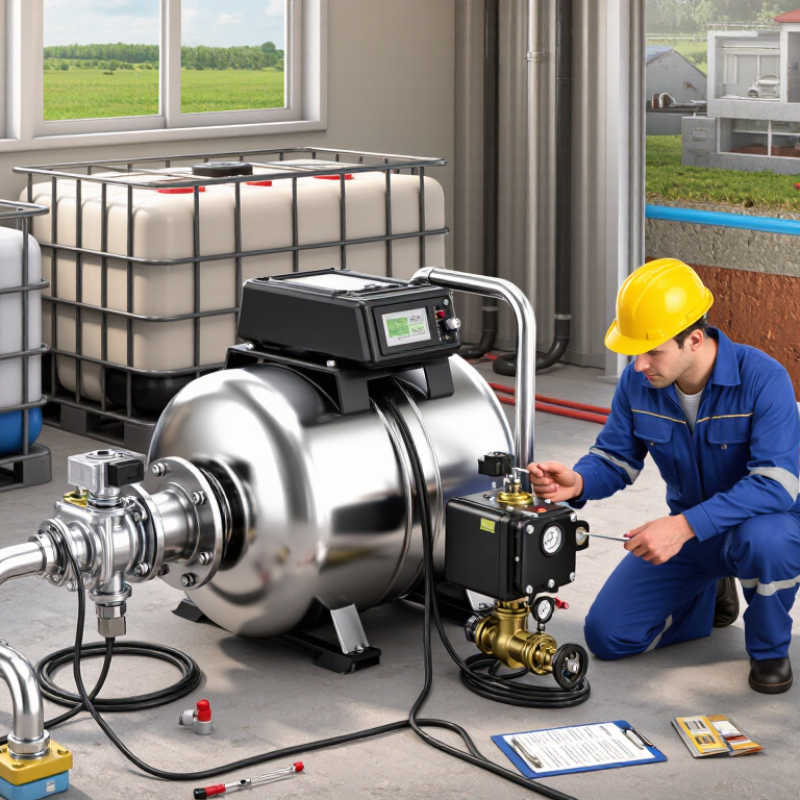
Choosing a Water Commander should begin with installation and safety, not appearance. Confirm the unit matches your pipe size, water pressure, temperature range, and available power supply. Ask a licensed installer to inspect the shutoff valve, drainage path, and electrical grounding. A controller placed beside a leaking joint is a poor decision. It may also make future repairs harder. Check the installation manual carefully, even when the equipment looks simple. Local plumbing and electrical requirements can change by location.
Tips: Photograph existing connections before installation. Leave clear space around the controller. Test the emergency shutoff with clean, dry hands. Keep children away from exposed wiring. Never bypass a pressure sensor or safety alarm. During my own equipment checks, I have found loose fittings after installation. Small errors can become expensive water damage. That experience made me more careful with torque and leak testing.
Maintenance should include monthly visual checks and scheduled professional servicing. Look for corrosion, dripping joints, damaged cables, blocked filters, and unusual pump noise. Record pressure readings and service dates in a simple log. Replace worn seals before they fail completely. Test alarms and automatic shutoff functions according to the manual. Do not assume a quiet system is a safe system. One weakness remains: remote monitoring can create false confidence when sensors are poorly positioned. Physical inspection still matters.
| Evaluation Dimension | What to Check Before Selection | Practical Requirement or Benchmark | Installation Evidence | Maintenance Requirement | Priority |
|---|---|---|---|---|---|
| Potable-Water Compatibility | Verify that every wetted component is suitable for drinking-water contact when the unit is installed on a potable-water line. | Look for certification to NSF/ANSI/CAN 61 or an accepted local equivalent. Materials should not introduce unacceptable taste, odor, or contaminants. | Certification mark, conformity documentation, and a complete wetted-material list. | Replace seals, cartridges, or hoses only with parts approved for potable water. | Critical |
| Flow-Capacity Sizing | Compare the unit's continuous and peak flow capacity with the building's calculated demand. | Size from the peak demand or fixture-unit calculation rather than relying only on pipe diameter. Avoid selecting a unit that operates continuously at its maximum rated flow. | Flow calculation, pipe-size confirmation, and the unit's performance curve or rated flow table. | Record operating flow and investigate a noticeable reduction, cycling, or unusual noise. | Critical |
| Operating Pressure | Check minimum and maximum inlet pressure, outlet pressure, pressure spikes, and the rating of connected pipes and fittings. | For many residential systems, normal static pressure is commonly maintained around 40–80 psi (275–552 kPa). Pressure above the local code limit, commonly 80 psi, generally requires pressure regulation. | Pressure-gauge readings taken at static and flowing conditions; pressure-reducing valve setting where required. | Inspect for pressure creep, leaks, and damaged gauges at least annually. | Critical |
| Backflow Protection | Determine whether the installation can allow contaminated water to flow back into the potable supply. | Use a backflow-prevention device appropriate to the hazard and approved by the local authority. Reduced-pressure assemblies are commonly used for higher cross-connection risks. | Approved device, correct flow direction, accessible test ports, and required air-gap or discharge arrangement. | Test and document the assembly at the interval required by local regulations; annual testing is common for testable devices. | Critical |
| Isolation and Service Valves | Confirm that the unit can be isolated without shutting down the entire property. | Provide accessible upstream and downstream shutoff valves. Use unions or service connections where removal may be necessary. | Valve handles remain reachable, labeled, and installed in the correct flow direction. | Operate isolation valves periodically to prevent seizure and verify that they close fully. | High |
| Drainage and Leak Management | Check whether the unit includes a drain, relief discharge, condensate outlet, or automatic leak shutoff. | Route discharge to an approved drain or safe termination point. Do not cap a required relief outlet or discharge it where people can be exposed to hot or contaminated water. | Drain piping has an air gap or approved termination and is protected from freezing and blockage. | Test the leak sensor or shutoff function according to the manual and clear the drain opening. | High |
| Electrical Safety | Review voltage, current, grounding, disconnect requirements, cable protection, and the location of electrical components. | Use the rated supply shown on the equipment label. In wet or damp locations, provide GFCI/RCD protection where required by local electrical code. | Correctly sized circuit protection, grounding or protective bonding, weather-resistant connections, and an accessible disconnect. | Test the GFCI/RCD using its test button at the interval recommended by the electrical authority or device manufacturer. | Critical |
| Enclosure and Moisture Protection | Assess exposure to splashing, condensation, flooding, dust, and outdoor weather. | For locations exposed to water spray, select equipment with an enclosure rating appropriate to the environment. IPX4 indicates protection against water splashing from any direction, but it does not indicate protection against immersion. | Verify the enclosure rating, cable glands, cover seals, mounting orientation, and clearance from standing water. | Inspect seals and cable entries for cracks, corrosion, or water ingress. | High |
| Temperature and Scald Protection | Determine whether the unit controls hot water, cold water, or both. | Where hot water is supplied, use temperature control and mixing protection suitable for the application. A common residential hot-water storage setting is approximately 120°F (49°C), while local codes may require different settings. | Temperature measurement at the outlet, correctly installed mixing valve, and accessible adjustment controls. | Check outlet temperature after servicing and inspect mixing-valve operation at the recommended interval. | Critical |
| Water Hammer and Vibration | Check for rapid-closing valves, pump cycling, pipe movement, and pressure surges. | Use suitable supports, flexible connectors, surge-control equipment, or slow-closing valves where the system design requires them. | Pipes are supported, connectors are not under excessive strain, and the unit is mounted on a stable surface. | Listen for banging, rattling, or repeated short cycling and correct the cause promptly. | Medium |
| Installation Environment | Confirm clearance, ambient temperature, ventilation, flood risk, accessibility, and protection from impact. | Install in a clean, dry, serviceable location within the temperature range stated by the manufacturer. Keep controls and shutoff valves unobstructed. | Measured clearances, secure mounting, freeze protection, and no storage of chemicals or combustible materials nearby. | Keep the area dry and unobstructed; inspect for corrosion, freezing, or physical damage. | High |
| Filter and Strainer Access | Identify sediment screens, inlet strainers, filters, and their service clearances. | Choose a design that allows filter removal without cutting pipework or draining an unnecessarily large section of the system. | Isolation valves are installed on both sides where needed, and the service cover can be removed safely. | Inspect strainers after commissioning and clean or replace filters according to pressure drop, water quality, or the manual. | Medium |
| Controls and Fail-Safe Operation | Review alarm functions, manual override, power-loss behavior, restart behavior, and fault indication. | The unit should indicate low flow, leakage, overpressure, sensor failure, or loss of power where those conditions are relevant. Manual shutoff should remain possible. | Commissioning record includes alarm tests, sensor tests, emergency shutoff verification, and restart checks. | Test alarms and safety shutdowns at the frequency specified by the manufacturer or facility risk assessment. | High |
| Noise and Energy Performance | Compare sound level, standby consumption, pump efficiency, and operating pattern. | Use published sound and power data measured under stated conditions. Prefer variable-speed or demand-controlled operation when it matches the system's duty cycle. | Commissioning readings for operating current, run time, pressure, and flow. | Trend energy use and run time; investigate a sudden increase that may indicate a leak or mechanical problem. | Medium |
| Documentation and Service Support | Check availability of installation instructions, wiring diagrams, spare parts, service intervals, and fault codes. | Select equipment with clear technical documentation, traceable replacement parts, and a documented commissioning procedure. | Keep the manual, wiring diagram, certificates, test results, and as-built pipe schematic at the installation site. | Maintain a service log containing dates, pressure readings, filter changes, alarm tests, and repairs. | High |
| Compliance and Inspection | Identify permits, inspections, plumbing approvals, electrical approvals, and local water-authority requirements. | Use products accepted by the local authority having jurisdiction and follow the applicable plumbing, electrical, building, and backflow rules. | Permit or inspection record, approved installation, and completed commissioning checklist. | Repeat regulated tests and inspections on the schedule set by the authority having jurisdiction. | Critical |
Choosing a Water Commander in 2026 requires more than comparing purchase prices. I start with its actual duty: flow rate, pressure range, cycle frequency, and water quality. A controller that struggles during peak demand wastes energy and shortens component life. The U.S. EPA’s 2023 Drinking Water Infrastructure Needs Survey estimates $625 billion in needs over 20 years. That figure makes maintenance planning more than a technical preference. It is a budget safeguard.
Request logged failure rates, test methods, and replacement-part availability. Marketing claims are not evidence. Look for fault alerts, manual override, surge protection, and a clear service process. EPA WaterSense reports that household leaks can waste nearly 10,000 gallons yearly. The controller should expose abnormal flow quickly, not merely automate schedules. I prefer a documented repair path over a longer warranty. Warranty wording can hide labor limits, shipping delays, and exclusions. Small print matters.
Calculate five-year cost: purchase, installation, electricity, filters, repairs, and downtime. WHO and UNICEF’s 2023 Joint Monitoring Programme reported that 2.2 billion people lacked safely managed drinking water in 2022. That global gap shows why dependable control has practical value.
Still, lifecycle estimates are imperfect. Local water chemistry can defeat optimistic assumptions. Ask for field references in similar climates, inspect service records, and test alarms before approval. Pay for resilience, not features you cannot verify.