
How to Choose a Battery Backup Sump Pump?
Choosing a back up battery sump pump is not simply a matter of selecting the largest motor. Your basement, drainage system, outage history, and maintenance habits all influence the right decision. A pump that moves 2,000 gallons per hour sounds powerful, but performance can drop sharply when water rises through a long discharge pipe.
Basement waterproofing expert Larry Janesky has said, “The best time to waterproof your basement is before it leaks.” That practical warning also applies to backup planning. Do not wait for storm water to enter before testing your equipment. Measure the sump pit, check the discharge route, and identify the pump’s capacity at your actual pumping height. Then compare battery type, expected runtime, charging speed, alarm features, and automatic switching. A sealed AGM battery usually requires less maintenance, while lithium systems may offer longer service life but cost more. Price is not the whole answer.
Look for a back up battery sump pump with a clear alarm, corrosion-resistant components, and accessible replacement parts. Test the system during a simulated power failure. Watch whether the float moves freely. Listen for unusual vibration. Small details matter.
No checklist is perfect.
Battery age, extreme cold, clogged lines, and a stuck float can still cause failure. I have seen homeowners test the motor but ignore the discharge pipe. That is an easy mistake. Choose a system you can inspect, understand, and maintain before the next heavy rain arrives.
What a Battery Backup Sump Pump Does and When You Need One
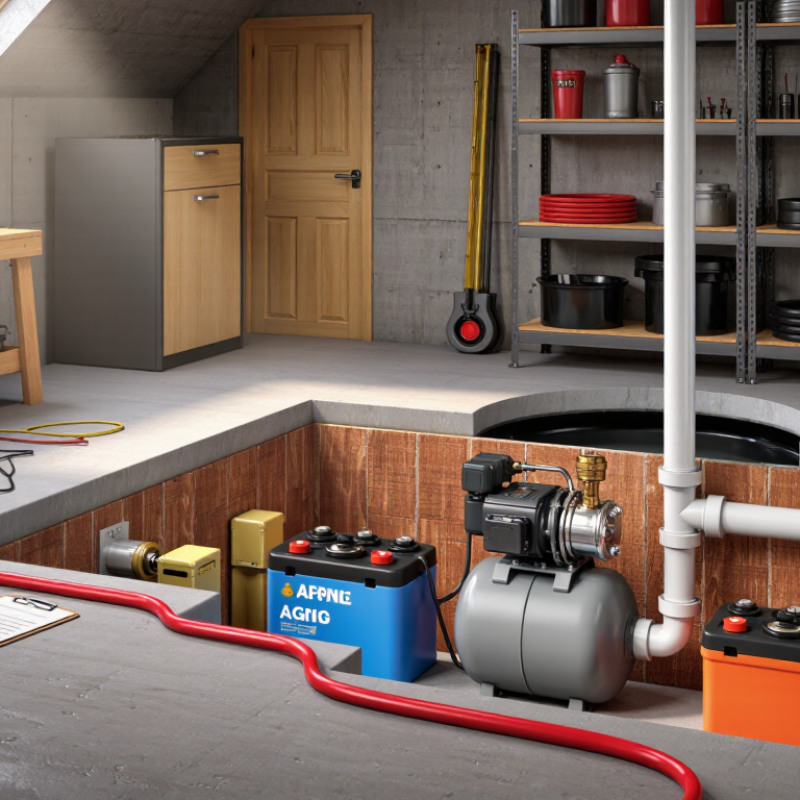
A battery backup sump pump is a second line of defense when the main pump stops. It uses a battery, charger, float switch, and separate pump motor. When rising water lifts the float, the backup starts automatically. This can protect a basement during a power outage, severe storm, or primary pump failure. It is especially useful where flooding could damage furniture, heating equipment, or stored documents.
It cannot fix every problem. A blocked discharge pipe can defeat both pumps. Neither can handle water entering faster than their rated capacity. Choose a model by checking flow at the actual discharge height, not only the advertised maximum. Measure the sump basin before buying, and confirm that the backup float moves freely. A high-water alarm adds useful warning. Battery type affects maintenance, too. Sealed batteries need less attention, while flooded batteries require regular fluid checks and ventilation. Test the system every few months. Unplug the primary pump. Pour water into the pit. Listen for a clean start and steady discharge. Replace weak batteries before storm season. It is easy to overestimate runtime. A small battery may last only several hours under heavy inflow. Read the installation instructions carefully, and use qualified electrical help when wiring is uncertain.
How to Choose a Battery Backup Sump Pump? - What a Battery Backup Sump Pump Does and When You Need One
| Evaluation Dimension | Typical Information | Why It Matters | Practical Selection Guidance |
|---|---|---|---|
| Primary purpose | Moves groundwater from the sump pit when the primary pump is unavailable or cannot keep up. | A power outage, failed pump, blocked discharge line, or unusually heavy rain can allow water to rise quickly. | Use it as a secondary layer of protection, not as a replacement for a properly sized primary pump. |
| Best time to install | Before storms, seasonal flooding, or an anticipated electrical outage. | Installation is more difficult and risky after the pit is already filling with water. | Install and test the system during dry conditions, then inspect it before severe weather seasons. |
| Pump capacity | Common residential backup pumps are often rated around 1,500–3,500 gallons per hour at low lift, but capacity decreases as the discharge height increases. | A pump’s advertised maximum flow may not represent its actual flow through the installed pipe and vertical lift. | Compare the pump’s flow rate at your actual discharge height, commonly called the total dynamic head. |
| Discharge height | The vertical distance from the pump outlet to the point where water exits the building or drainage system. | Higher lift and longer or narrower pipes increase resistance and reduce water flow. | Measure the height and account for elbows, check valves, pipe length, and any outdoor slope before choosing capacity. |
| Battery type | Common options include sealed lead-acid, absorbed glass mat, and flooded deep-cycle lead-acid batteries. Lithium batteries are also available in some systems. | Battery chemistry affects maintenance, ventilation requirements, service life, charging behavior, and cost. | Choose a battery specifically rated for standby or deep-cycle use and follow the charger and ventilation requirements. |
| Battery voltage | Residential systems commonly use 12-volt batteries; some higher-capacity systems use 24 volts. | The battery voltage must match the backup pump, control panel, and charger. | Never substitute a battery with a different voltage unless the system documentation explicitly permits it. |
| Battery capacity | Capacity is commonly expressed in ampere-hours, such as approximately 75–120 Ah for many residential deep-cycle batteries. | Higher capacity generally provides longer operating time, although actual runtime also depends on pump load, battery age, temperature, and cycling frequency. | Select capacity based on the expected outage duration and water inflow, rather than choosing solely by physical battery size. |
| Estimated runtime | Many residential systems can provide several hours of intermittent pumping, but continuous runtime may be much shorter. | A sump pump normally cycles on and off; continuous operation consumes energy much faster. | Use the manufacturer’s runtime chart at the intended flow rate and test the system under realistic conditions. |
| Automatic activation | A float switch or electronic water-level sensor starts the backup pump when the water reaches a set level. | Automatic activation allows the system to operate when no one is home. | Choose a sensor that moves freely and install it where it cannot be trapped by the primary pump, pipes, or pit walls. |
| High-water alarm | An audible or visual alarm activates when the water level becomes unusually high or the system detects a fault. | The alarm provides an early warning before water reaches the basement floor. | Prioritize an alarm with a test function and a sound level that can be heard from occupied areas. |
| Charging system | A dedicated charger maintains the battery while utility power is available and switches to battery operation during an outage. | A suitable charger helps prevent overcharging, undercharging, and premature battery failure. | Look for automatic charging, charging-status indicators, and protection against short circuits or incorrect connections. |
| Discharge connection | The backup pump may use a separate discharge pipe or connect to the existing discharge line with an appropriate check-valve arrangement. | Incorrect connections can cause backflow, reduced capacity, or unwanted circulation between pumps. | Use a properly sized check valve and ensure the discharge route directs water safely away from the foundation. |
| Installation space | The pit must have enough room for the backup pump, sensor, discharge piping, and safe access to the battery. | Crowded pits can restrict float movement and make inspection or battery replacement difficult. | Measure the pit diameter and depth before purchase, and keep electrical components elevated and dry. |
| Maintenance needs | Inspect the pump, check valve, wiring, alarm, charger, and battery terminals periodically; battery replacement is commonly needed every few years depending on conditions. | A backup system that is not tested may fail when it is most needed. | Test operation at least several times per year and after major storms or extended outages. |
| When it is especially useful | Homes with finished basements, frequent storms, unreliable electricity, high groundwater, or valuable stored items below grade. | The potential cost of water damage may be much higher than the cost of secondary pumping protection. | It is strongly worth considering where a sump pump failure could cause rapid or expensive damage. |
| Limitations | A battery backup cannot operate indefinitely and may not handle extreme inflow rates or a blocked discharge route. | Battery power is limited, and mechanical or drainage problems can affect both primary and backup systems. | Combine the backup pump with a reliable primary pump, a clear discharge path, a high-water alarm, and an emergency power plan for long outages. |
Related Posts
-
Why Choose a Backup Sump Pump Battery?
-
What Are the Top Battery Backup Sump Pumps in 2026?
-

What is a Water Pressure Backup Sump Pump and How Does it Work?
-

The Ultimate Guide to Choosing the Best Battery Powered Sump Pump for Home Flood Protection
-
Ultimate Guide to Choosing the Best Sump Pump with Battery Backup for Homeowners
-
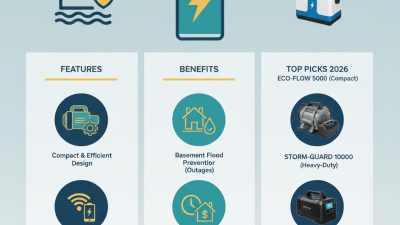
2026 Best Battery Sump Pump Features Benefits and Top Picks?